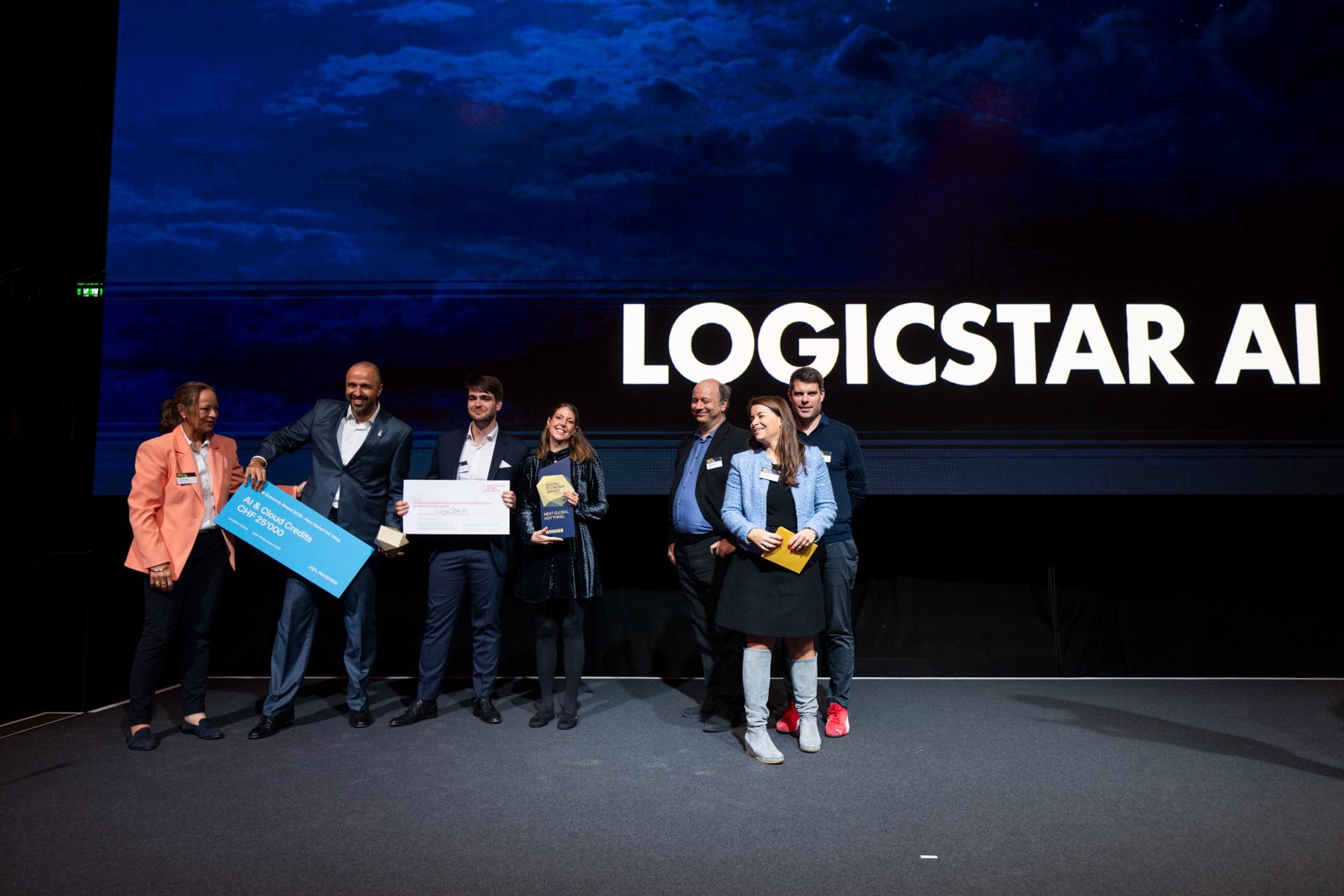
LogicStar AI won the Next Global Hot Thing category at the Digital Economy Award 2026 on 19 November at Zürich's Hallenstadion. The award winners were announced alongside established Swiss organizations including Roche, CSS and the Swiss Agency for Development and Cooperation, each recognized in separate categories.
Selected for international potential
The Next Global Hot Thing category focuses on early-stage Swiss technology companies with the potential to make an impact internationally. Candidates are nominated by scouting partners, evaluated by industry experts and selected by a jury.
Previous winners of the same category include ANYbotics (2023), Cradle (2024) and mimic robotics (2025).
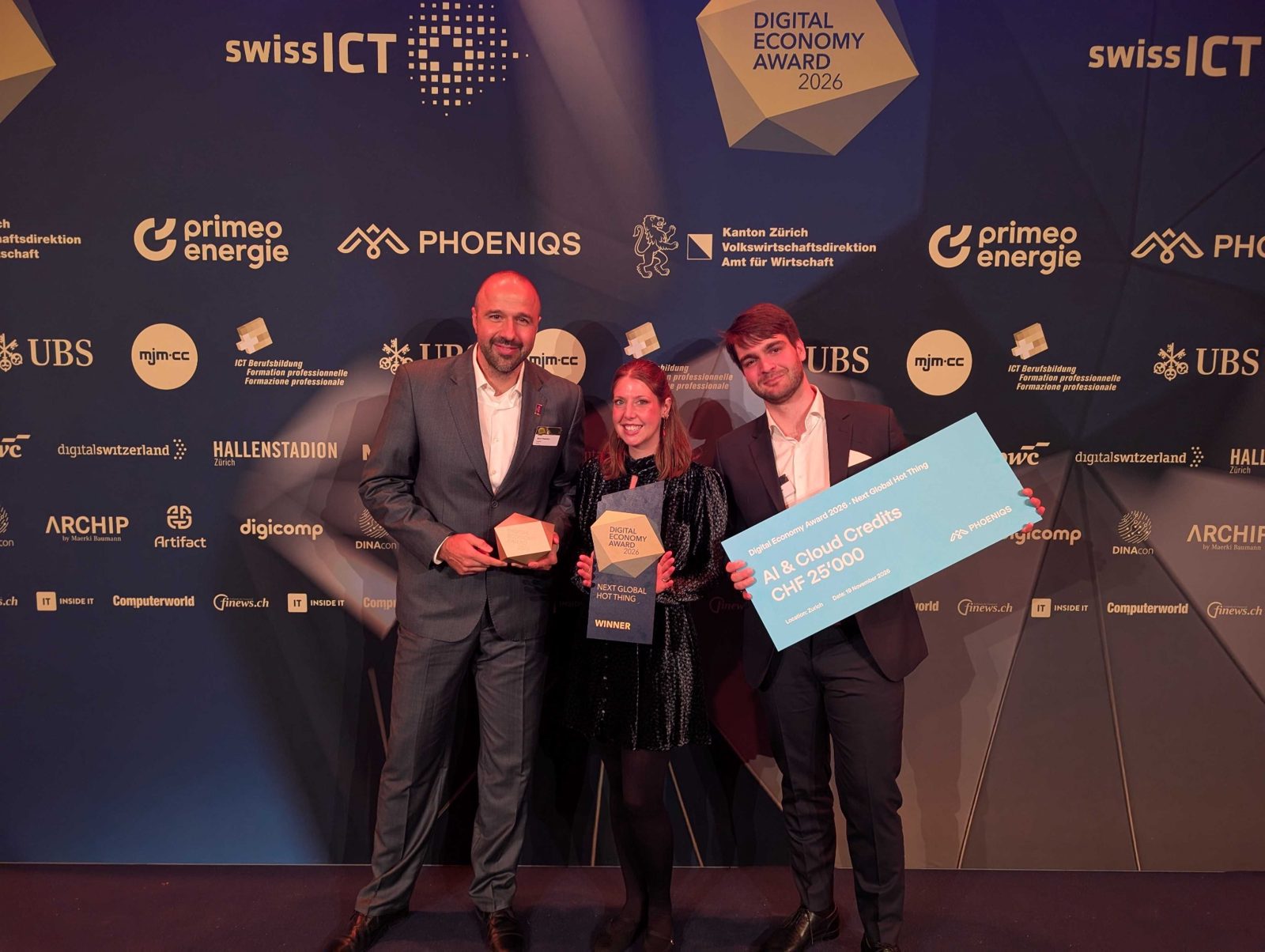
The Digital Economy Award 2026 trophy. LogicStar AI won the Next Global Hot Thing category.
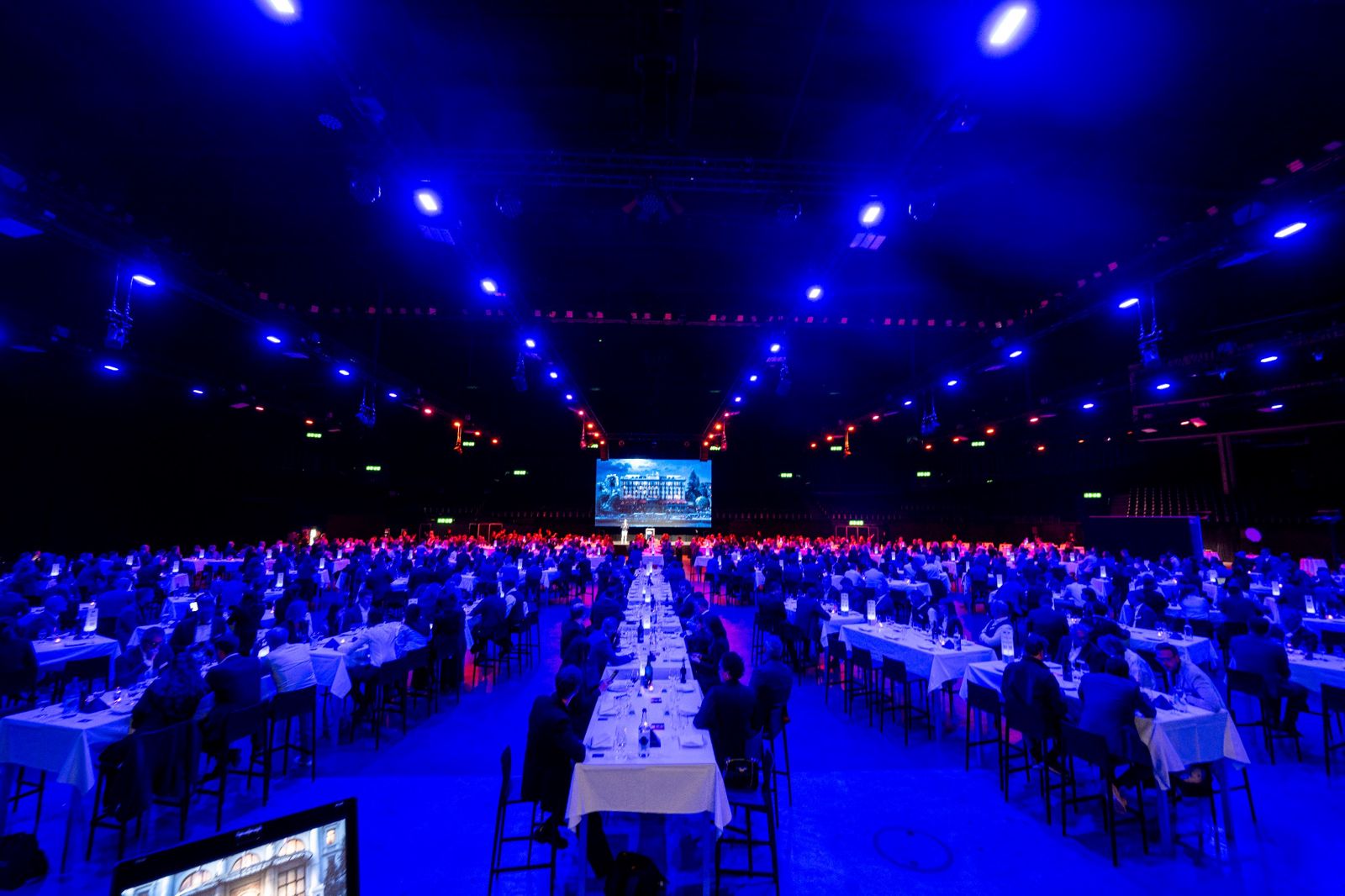
This year's ceremony marked the 20th anniversary of the Digital Economy Award, one of Switzerland's leading recognitions for digital innovation. 29 finalists across six categories gathered at Hallenstadion, with around 600 guests from business, research, government and the technology industry.
Swiss President Guy Parmelin opened the evening, highlighting Switzerland's strength in innovation and the challenge of scaling its companies.
The 20th anniversary award night at Hallenstadion Zürich. Photo: Eduard Meltzer / Digital Economy Award.
The problem we're working on
AI agents can already write and review code. The hard part now is knowing when to trust them.
Which bugs does an agent miss? Where does human review still make a difference? What happens after the code ships?
At LogicStar, we work alongside engineering teams to build, measure and improve their coding-agent workflows. We test agents against real repository history, find where they fail and use outcomes after merge to decide what can safely run without human review.
The goal isn't maximum automation. It's maximum verified engineering value.
Celebrating the Next Global Hot Thing win. Photo provided by the LogicStar team.
We built DeepCode, the first commercial AI for code, which is now Snyk Code. At LogicStar, we combine that experience with coding-agent research and hands-on engineering work. Recognition from an independent Swiss technology jury is encouraging. What matters next is what we can help engineering teams achieve.
Thanks to the jury, swissICT, the event organizers and our team, customers and partners who have helped us get here.
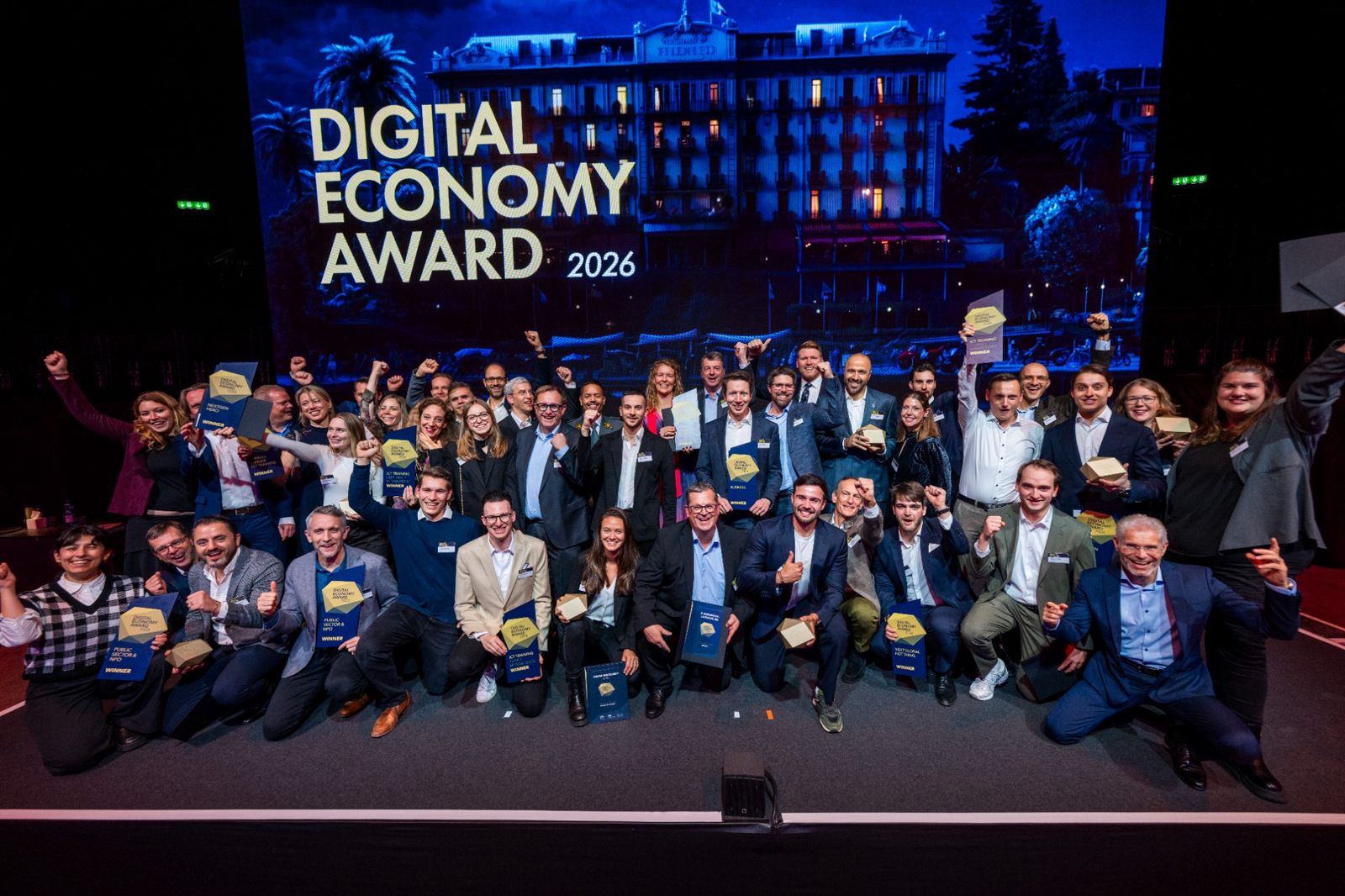
The 2026 award recipients across six categories. Photo: Eduard Meltzer / Digital Economy Award.
Photo credit: Cover photograph by Eduard Meltzer / Digital Economy Award.
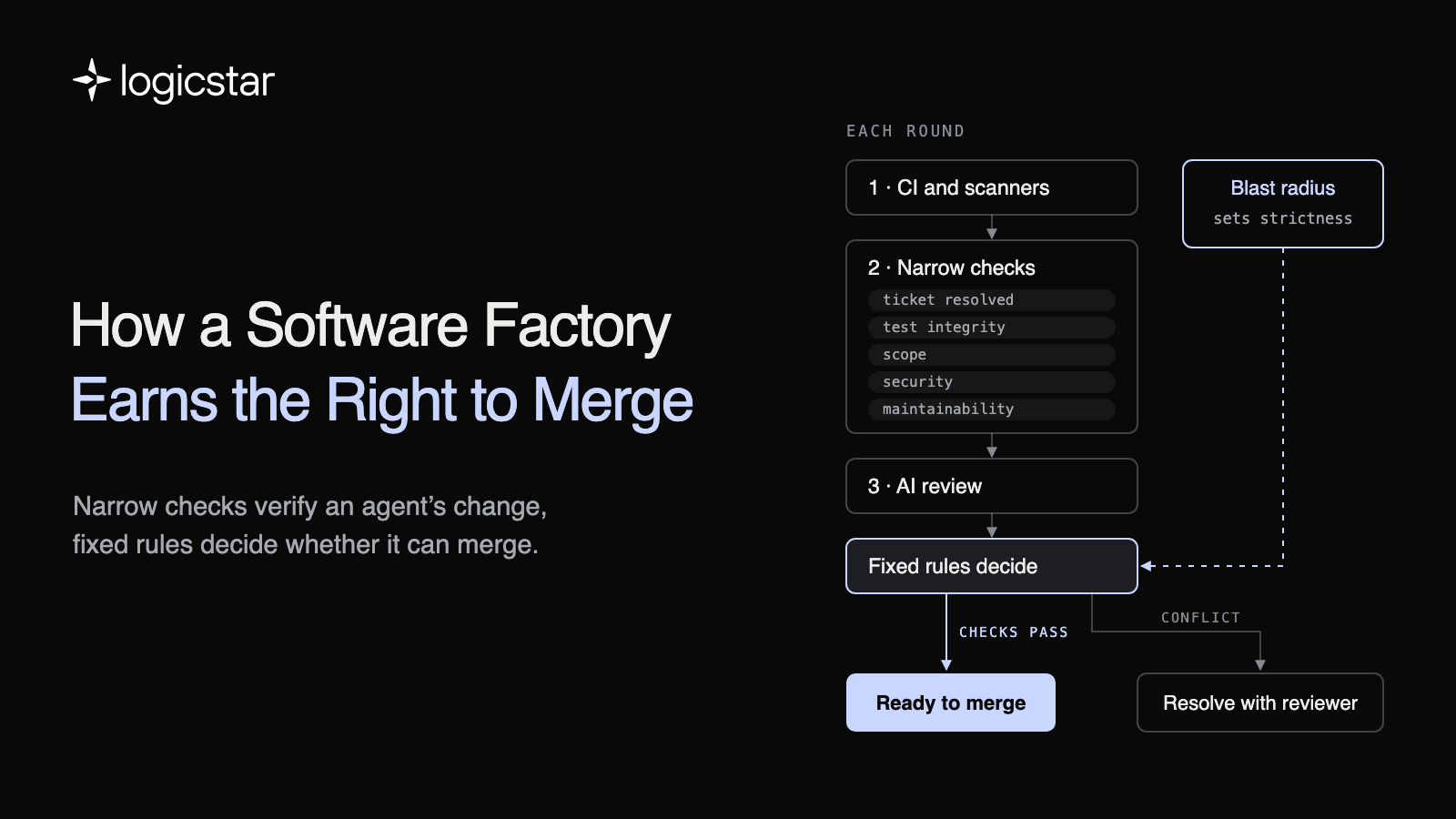
A coding agent can turn a ticket into a green pull request in minutes. We split the merge decision into narrow checks, let fixed rules decide, set the strictness by the blast radius of a change, and bring in a person only where the agent gets stuck.
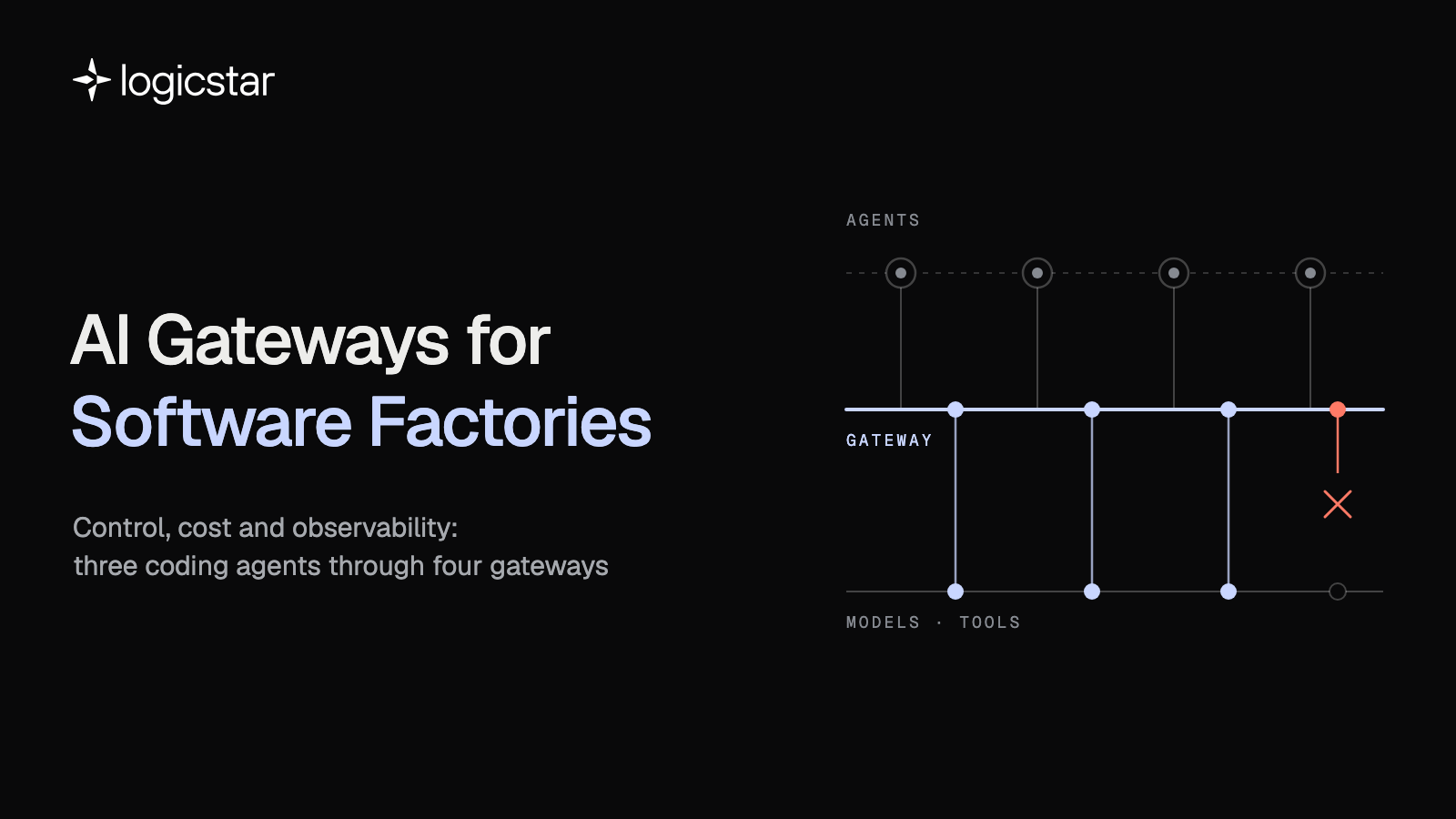
We ran three coding agents through four gateways to see what a gateway controls, what it measures correctly and where it misleads you, from budgets that overshoot to telemetry that leaks prompts and data residency set hop by hop.
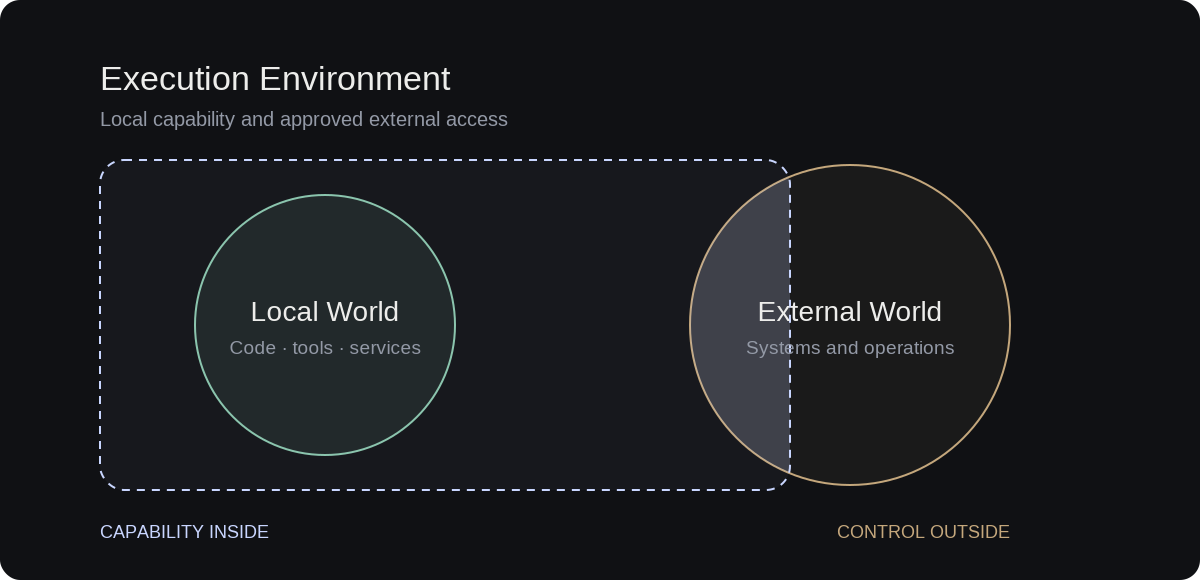
A cheaper agent environment can make a task more expensive: when an agent cannot reproduce a bug or verify its fix, the work goes back to an engineer. We give agents prepared VMs and containers with realistic services and data, control tightly what they can reach beyond their workspace, and compare four platforms that run them.
We use cookies to run the site and understand how it’s used. You can accept all cookies or reject non-essential ones. See our Cookie Policy.
Cookie settings
By clicking 'Accept all cookies', you agree to storing cookies on your device to enhance site navigation, analyze site usage and assist in our marketing efforts as outlined in our cookie policy.