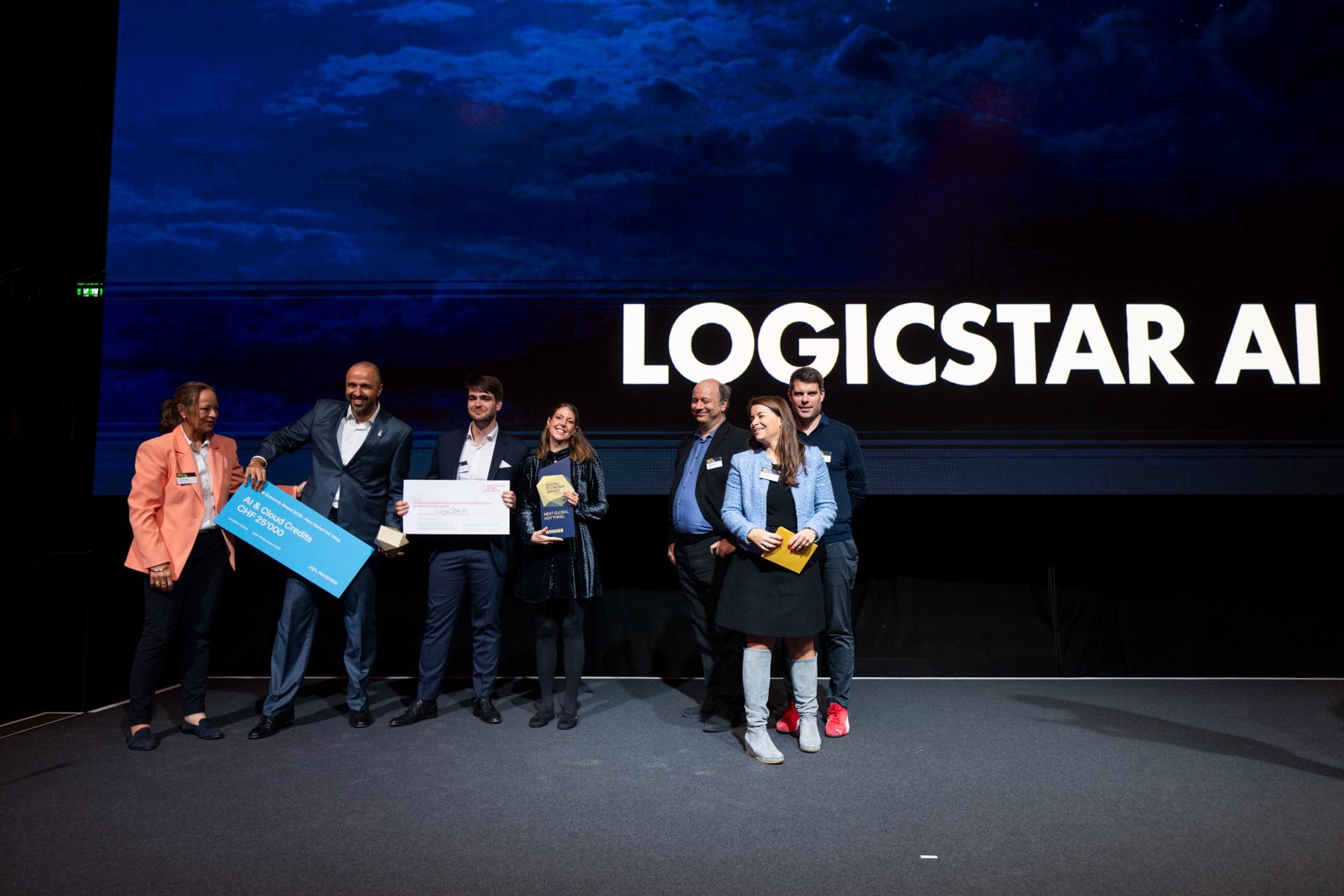
LogicStar AI Wins the Digital Economy Award 2026
LogicStar AI wins Next Global Hot Thing at the Digital Economy Award 2026, a Swiss technology award recognizing international potential.
November 25, 2026 / 1 min read
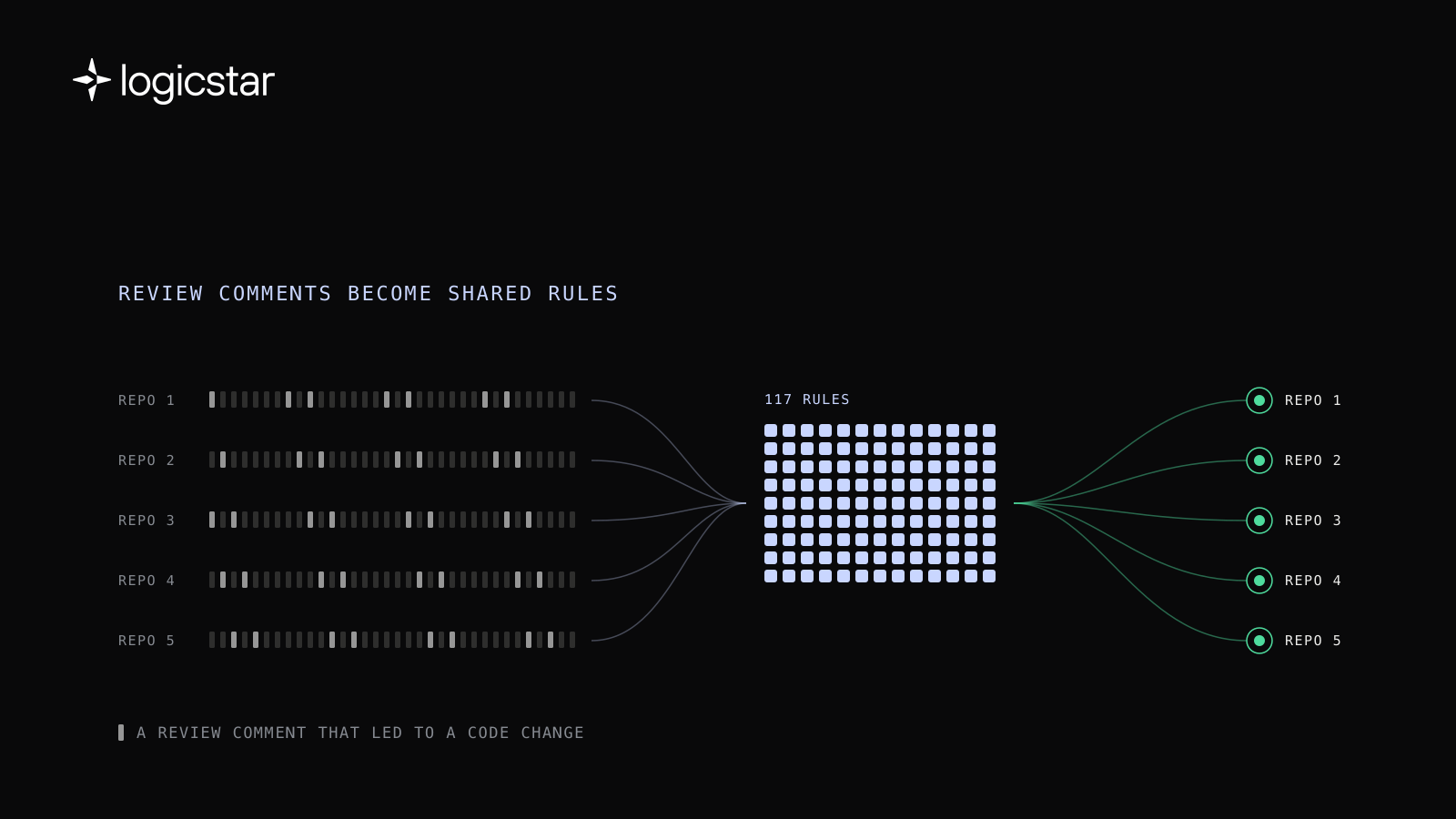
2,755 pull requests. 14,620 review comments. 5 repositories.
Every review comment that leads to a fix is a lesson. Today, most of them stay with just the author. Together with NZZ, we at LogicStar asked: Can those lessons become checks for every team, on code they have never seen?
We analyzed 2,755 pull requests across five repositories and extracted 117 recurring rules from the review comments that led to a code change. We then ran them on 991 of those PRs that they had never seen and they held up, matching 336 issues that NZZ’s review or later fixes had surfaced. An independent model rated 81% of flags valid compared to 87% for human review comments on the same PRs.
The rules also transfer: of the matched non-bot issues, 31% were found only by rules learned in another team’s repository. Based on our work, NZZ can take the best practices of each team to every team.
of the matched non-bot issues were found only by rules learned in another team’s repository.
Schematic · rules from the other four run on repo 1
The next step: enforce shared quality standards across teams, without flooding developers with comments.
Blog
LogicStar AI wins Next Global Hot Thing at the Digital Economy Award 2026, a Swiss technology award recognizing international potential.
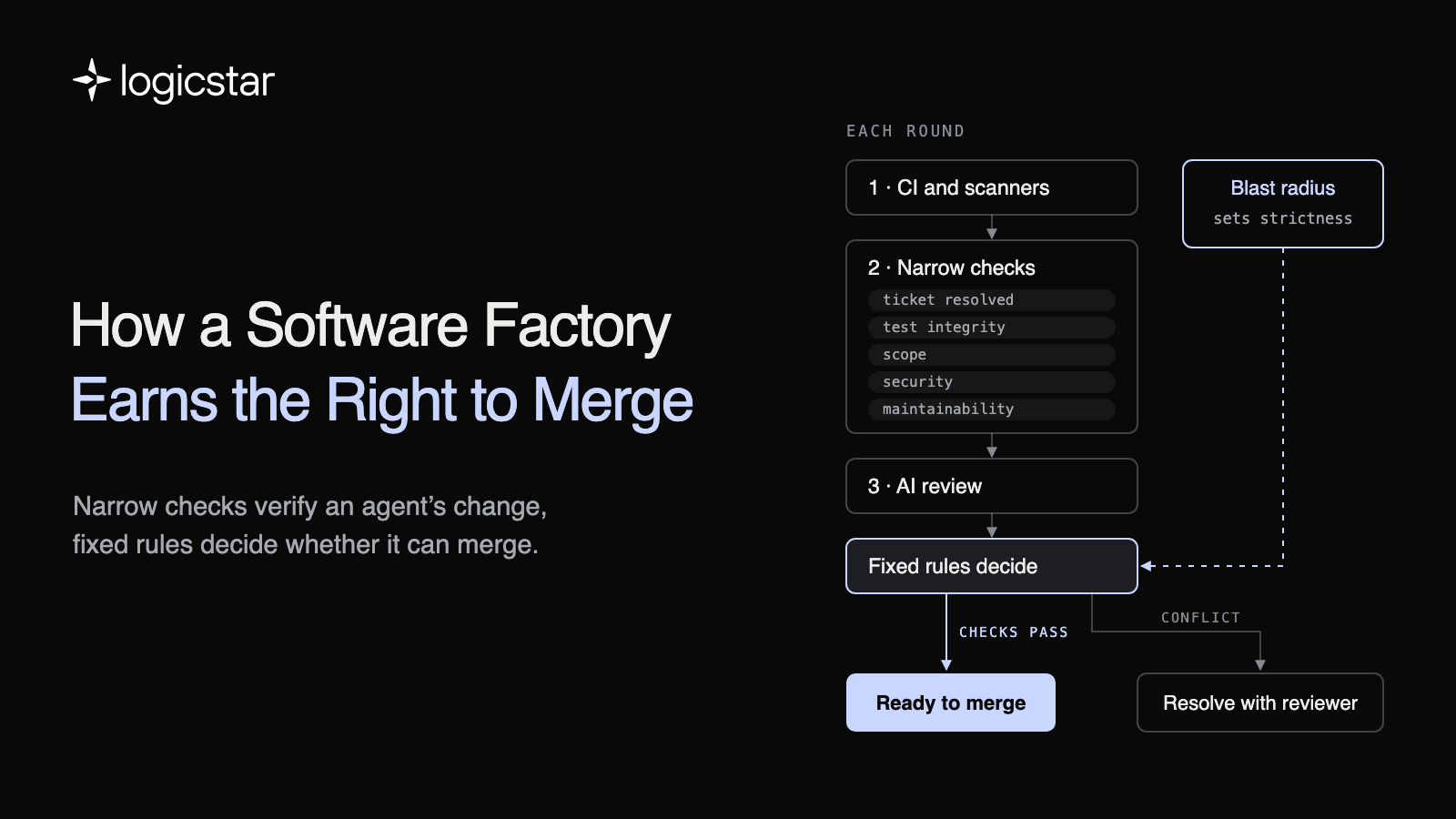
A coding agent can turn a ticket into a green pull request in minutes. We split the merge decision into narrow checks, let fixed rules decide, set the strictness by the blast radius of a change, and bring in a person only where the agent gets stuck.

We ran three coding agents through four gateways to see what a gateway controls, what it measures correctly and where it misleads you, from budgets that overshoot to telemetry that leaks prompts and data residency set hop by hop.
With the team behind the first AI for code.
Backed by frontier coding agent research with ETH Zurich.
Cookie settings
By clicking 'Accept all cookies', you agree to storing cookies on your device to enhance site navigation, analyze site usage and assist in our marketing efforts as outlined in our cookie policy.