How LogicStar Autonomously Finds and Fixes A Real Bug in Our Production Code
Modern engineering teams face a sharp rise in code written by AI tools, yet the rate of software failures continues to grow. Backlogs expand, incidents slip through, and valuable engineering time is burned on maintenance instead of product development.
LogicStar changes this dynamic with fully validated, autonomous bug fixing.
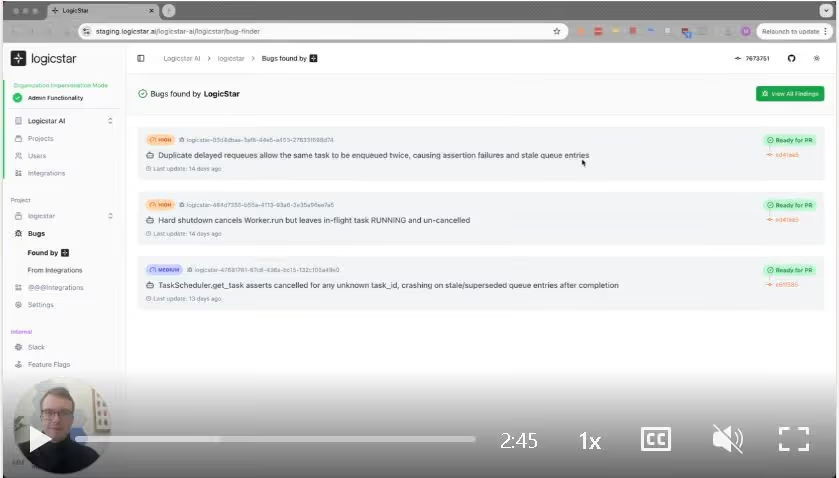
In this short walk-through, our co-founder Mark Müller shows a real example from our own services. The LogicStar Agent detects a tricky concurrency bug, reproduces it in our sandbox, evaluates candidate fixes, validates the correct one with targeted tests, and ships a merge-ready pull request.
Watch the demo video: “Interested in Self-Healing Software? Check out this walk-through where I demonstrate how the LogicStar Agent finds, reproduces, and fixes a tricky concurrency issue in our codebase, providing me with a merge-ready and well-tested PR.”
Our team now sees several such fixes every day, all generated before we even open our laptops. As one comment noted:
“It is amazing that we are getting a couple of such bug fixes every day and 95 percent of the work is done before we even log in in the morning.”
The result is simple. Faster recovery, fewer regressions, and engineering teams that can finally focus on shipping meaningful product improvements instead of combing through incidents.
If you want to explore what self-healing applications can unlock for your team, get in touch for a trial.
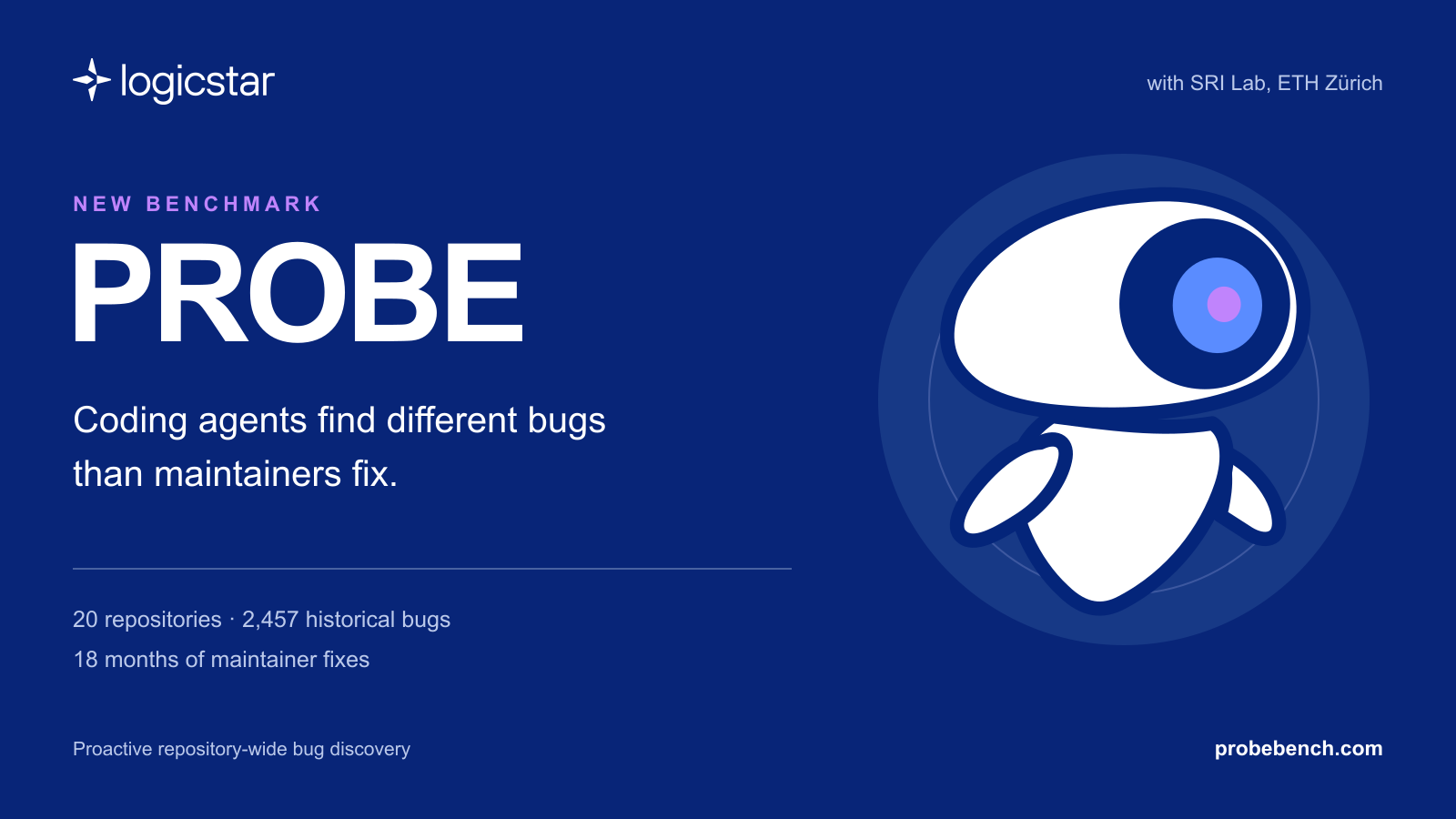
PROBE measures whether coding agents find the bugs maintainers fix. Across 20 repositories and 2,457 historical bugs, the best single run recovers 20.8%, even though most sampled findings are real defects.
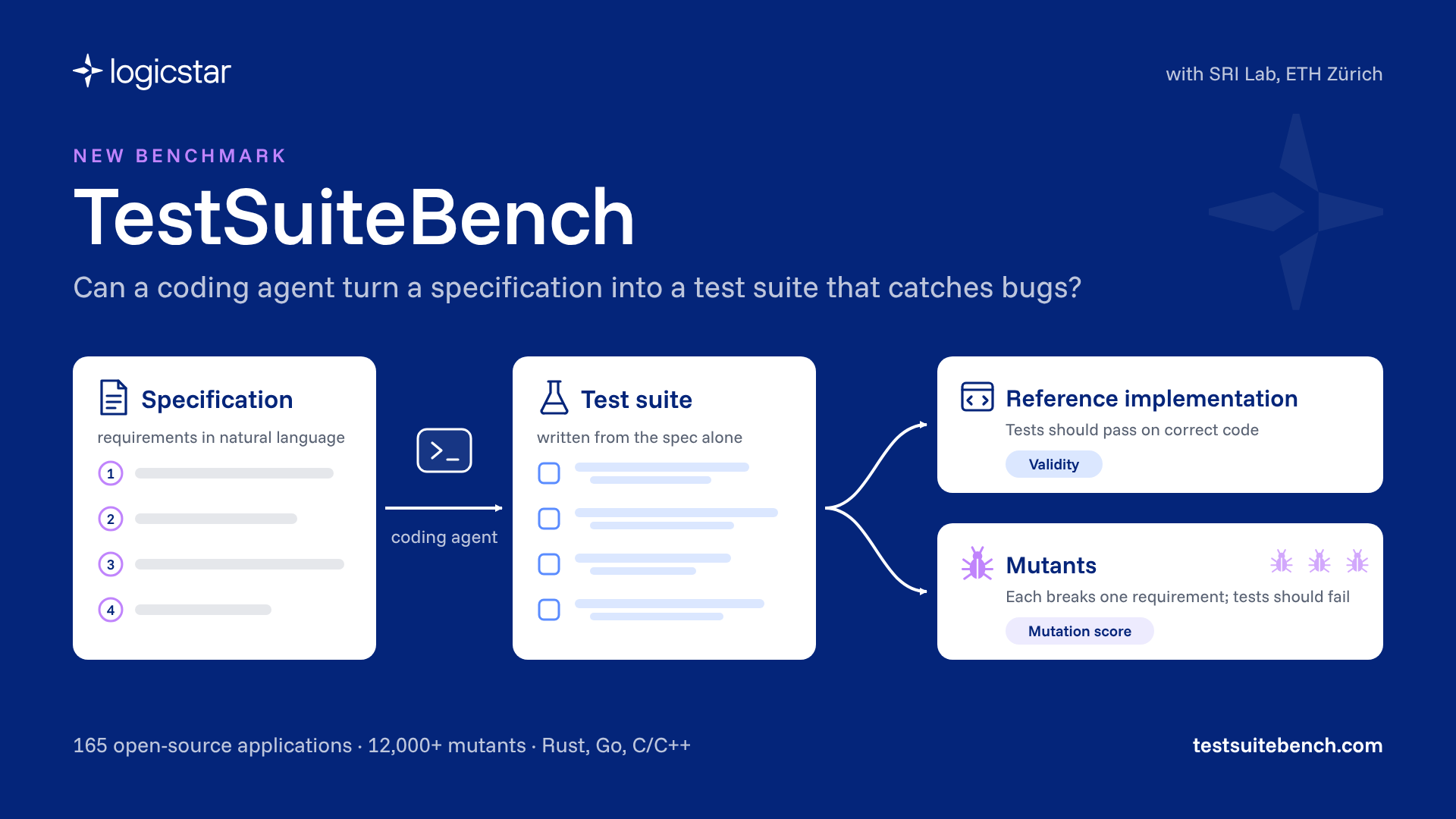
We built TestSuiteBench to measure whether coding agents can turn a specification into a test suite that catches bugs. Their tests are valid but weak: the best agent catches 55% of injected bugs, while implementations built from the same specifications pass up to 93% of the reference tests.
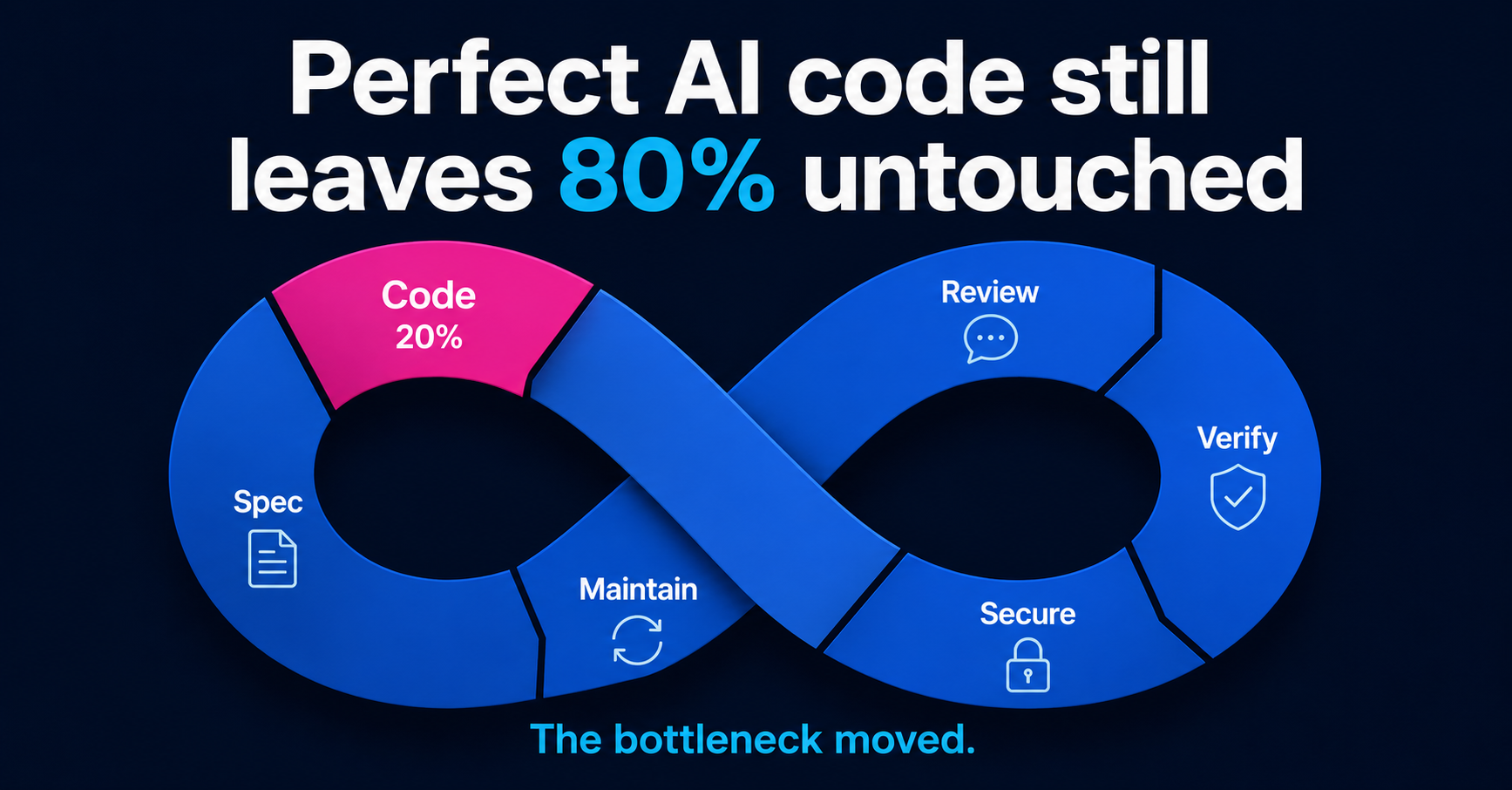
Why automating the most visible part of the job did not automate the largest one: where the bottleneck moved, and how to tell whether your agents are actually getting better.
We use cookies to run the site and understand how it’s used. You can accept all cookies or reject non-essential ones. See our Cookie Policy.
Cookie settings
By clicking 'Accept all cookies', you agree to storing cookies on your device to enhance site navigation, analyze site usage and assist in our marketing efforts as outlined in our cookie policy.