June 16, 2026
-
4
min read
Behavioral Parity Across a Surface Too Large to Test by Hand
A developer-infrastructure company sells a product whose entire promise is fidelity: code that passes against it should behave identically in production. Here is how LogicStar finds the correctness gaps that hand-written tests and code review miss across a surface too large to cover by hand, and ships them as fixes the team's own maintainers merge.
The company lets engineering teams reproduce a production environment on their own machines. A developer points their tooling at a local endpoint, and the product responds exactly as the real system would. Customers do not use it as a convenience. They use it as a trust gate. If a test passes against it, they ship, on the belief that it will pass in production.
That makes faithfulness the product, and faithfulness is hard for one reason above all others. The surface is enormous: a large, externally defined set of behaviors, each with its own validation rules, state transitions, error codes, and edge cases, all of which keep changing as the systems being reproduced evolve. A team can write tests for the behaviors it thought of. The defects live in the behaviors it did not.
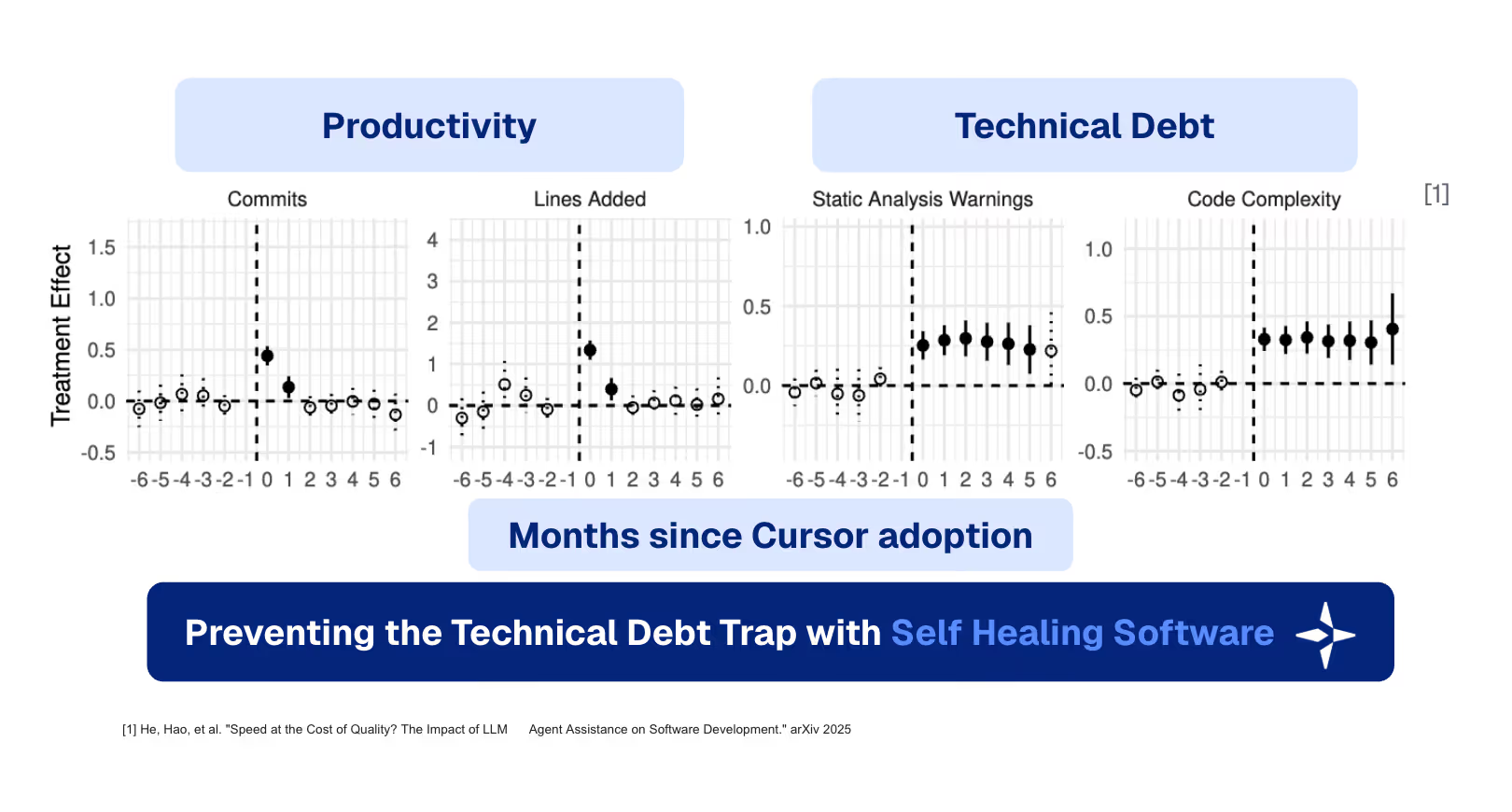
When one of those gaps slips through, it surfaces in the worst possible place. A customer's continuous integration breaks. A public issue gets filed that reads "this does not behave like the real thing." An enterprise evaluation stalls on an edge case. And like most teams in 2026, the company ships with AI coding agents, which means the surface grows faster than any human can review it.
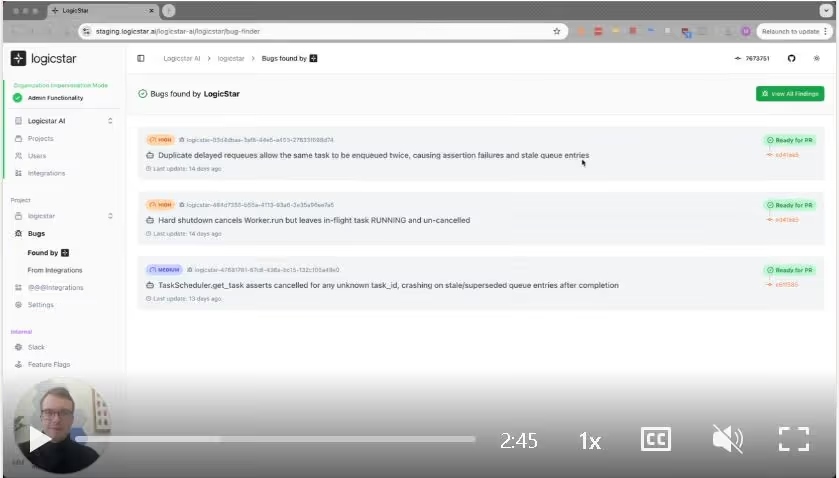
LogicStar analyzed the product's behavior and concentrated its findings in six of its highest-complexity, highest-traffic areas, the exact places where matching the real system is hardest to hold. The findings were not style opinions. They were behavioral divergences from the system the product promises to reproduce.
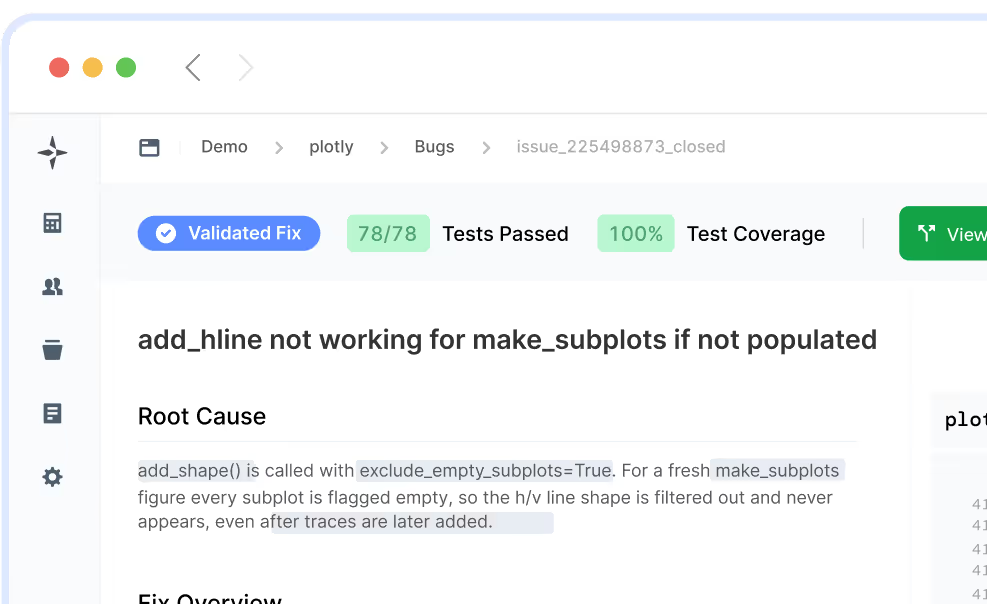
One finding sat in a configuration-validation path. The validator required an element that the real system, and the product's own published interface, both treat as optional. So a standard, valid configuration was rejected with an error before it was ever stored.
For a customer, the failure chain is the kind that does real damage:
A single incorrect condition in a validator, a few lines of code, was enough to break a workflow that would have worked perfectly in production. This is the long tail. No one writes a test for the rule shape they did not know was wrong.
When other developers build on your product, a correctness gap is not a cosmetic bug. It is a broken promise, and the most dangerous version is the false negative. A test that passes locally and fails in production does more damage than a test that simply fails, because it ships broken code with your customer's confidence attached to it.
Hand-written test suites and code review only cover the cases a team already thought of. They cannot cover the long tail of edge cases that a large, fast-moving, externally defined surface generates, and that is precisely where the next customer-filed issue is hiding. LogicStar works that long tail continuously, and turns it into merged fixes instead of public bug reports.
The goal was never to maximize the number of findings. It was to surface the divergences that were real, specific, and worth a maintainer's time, and to deliver them as fixes that could be reviewed and merged.
"We are fixing these issues almost automatically, with minimal input from our engineers, and we are merging the fixes. We are literally moving forward."
The customer's engineering lead
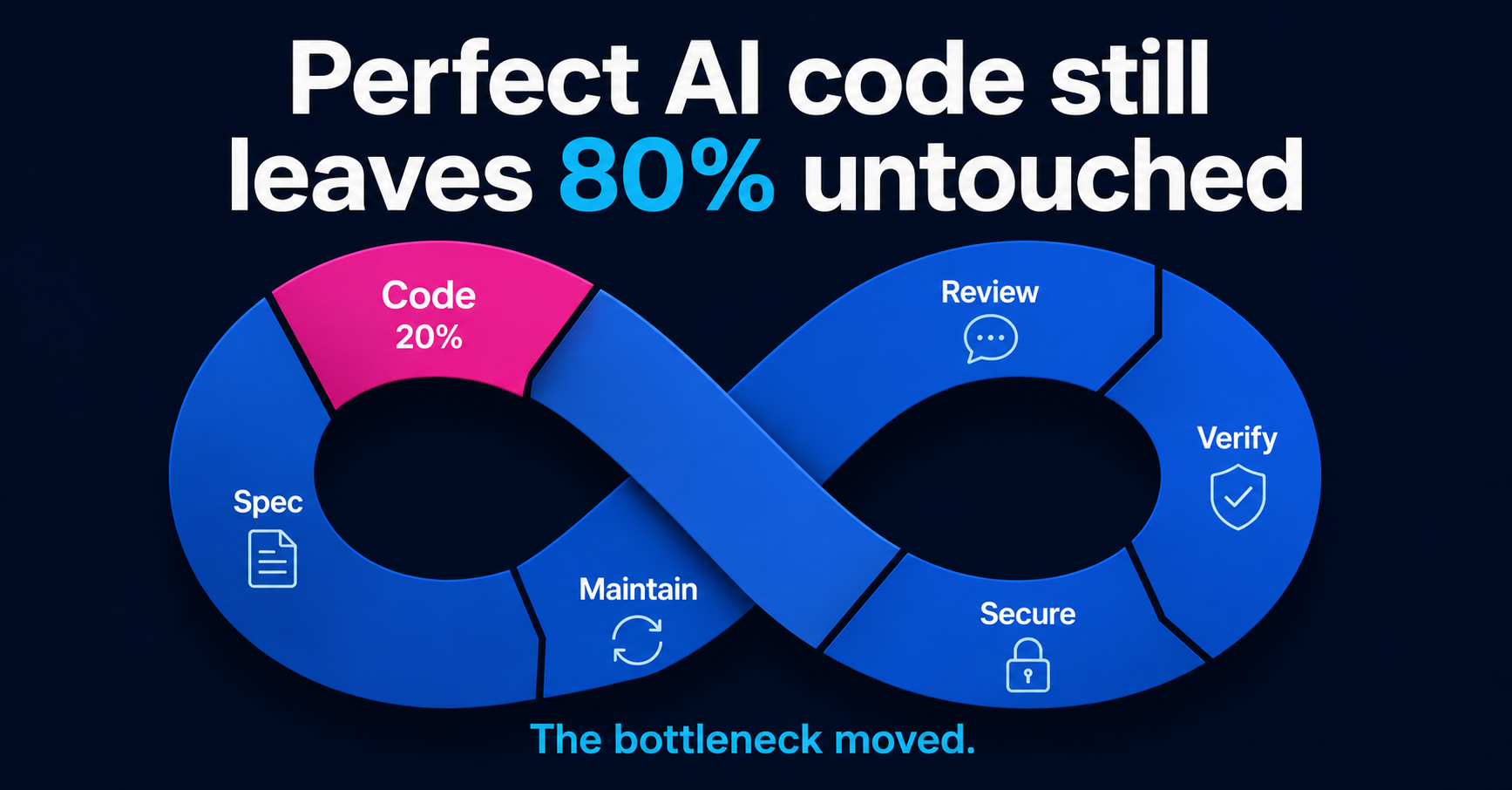
AI-assisted development grows your product surface faster than any team can review it. For a product whose contract with its customers is correctness, the gap between what you ship and what you can verify by hand is exactly where your next customer-filed bug is waiting.
A larger surface covered. The long tail caught early. Fixes merged, not issues filed.
LogicStar finds, reproduces, and fixes the behavioral and correctness gaps in your codebase, including from your own test suites, and delivers them as reviewed pull requests. See what it surfaces in your code: support@logicstar.ai.

Build an Agentic SDLC you can trust. Prove where agents can work without additional human review.
A forward-deployed engineer, plus the platform, measured on your own repositories.
.png)