June 19, 2026
-
4
min read
When a Crash Is Not a Ticket, It Is a Lost Record
A field-software company for the building trades runs an app that construction crews use on real job sites, offline and on the move. For software like this, reliability is not a feature, it is the product. Here is how LogicStar found a vulnerability in the authentication flow and the root causes behind real production failures, across the mobile app and the backend, and fixed them before the next worker hit them.
The company replaces paper, phone calls, and group chats for construction crews. A worker uses the app to log a task, document a defect, or pull the latest plans, directly from the site. Adoption depends on one thing above all: it has to work the first time, every time, under real field conditions.
That is what makes reliability essential. Field conditions leave no room for retries or error messages: a worker on a scaffold or in a basement with no signal will not stop to re-attempt a failed action or file a support ticket. If the app fails mid-report, the record is simply gone, unrecoverable when it is needed as evidence in a payment dispute or a defect claim. One failure in front of a crew can lose the account.
And the team is lean: around ten engineers covering a large and growing product surface without a dedicated QA function. That is exactly where reliability defects accumulate faster than a small team can find them by hand, especially in a mobile codebase where the same code behaves differently on Android than on iOS.
Working across the mobile app and the backend, LogicStar surfaced security and reliability defects that mapped directly to real field failure modes, not to theoretical edge cases.
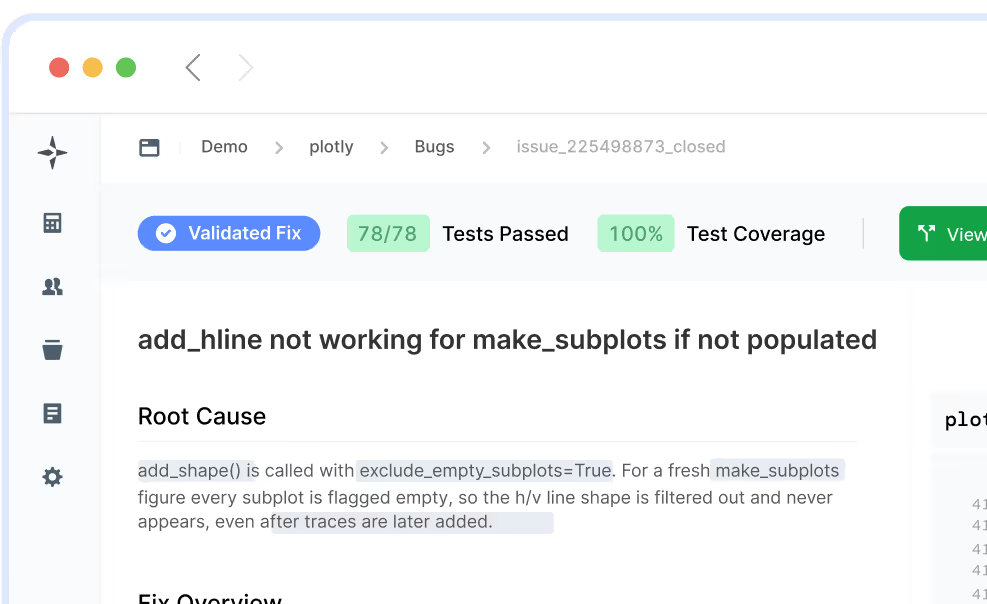
Each finding came with an impact assessment and a full investigation of its root cause, context the team's existing alerts did not provide.
The most important finding of the trial was in the authentication mechanism. The backend was not validating some client-supplied data, which could have allowed one account to be accessed as another. There is no evidence it was ever exploited. This is the kind of defect that never shows up as a crash and never appears in a demo. It just sits in the code as an open door until someone finds it. It was found and fixed inside the trial.
"One big win was that the system found an issue in our authentication mechanism. That is something we would not have discovered on our own, and we were able to fix it quickly."
The customer's engineering manager
The mobile findings were not hypothetical. A push-notification setup that failed without being caught was tied to real production errors across active users. A file-deletion crash showed up on Android, the platform most common on construction sites. A failure in the app's primary data-capture path is not a minor glitch when that path is the main way workers enter information. LogicStar did not just flag that these errors existed in monitoring; it found the latent code paths behind them and delivered the fixes.
Software used in the field carries weight that office software does not. The record is contractual. The conditions are hostile. The user has no patience for friction and no path to recovery when something fails. A crash is not an inconvenience. It is lost data and lost trust, and trust with a hands-on workforce does not come back easily.
LogicStar does not replace a team's judgment about what to build. It gives a lean team a way to surface, prioritize, and fix the reliability and security issues that would otherwise reach a worker on site, where there is no second chance to get it right.
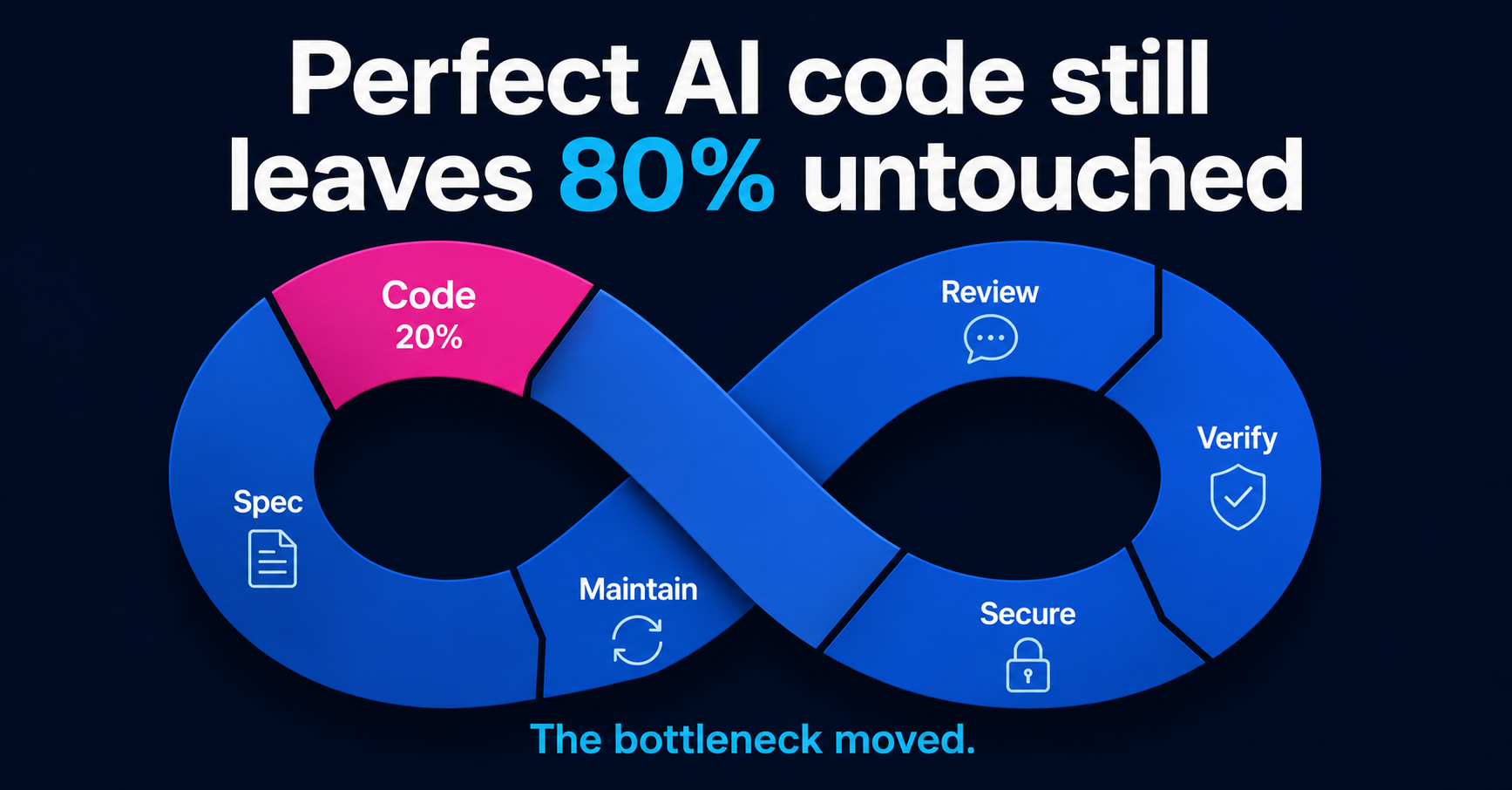
AI-assisted development lets a small team ship a large, capable product. It does not make that product reliable or secure in the hands of a user who cannot tolerate failure. LogicStar fills that gap, and acts as a safety net for the issues a team would otherwise only find once a worker hits them on site.
Fewer field failures. Crashes fixed at the source. A safety net for a team without a QA function.
LogicStar finds, reproduces, and fixes latent issues across your mobile app and backend, and delivers them as reviewed pull requests. See what it surfaces in your code: support@logicstar.ai.

Build an Agentic SDLC you can trust. Prove where agents can work without additional human review.
A forward-deployed engineer, plus the platform, measured on your own repositories.


.png)