June 5, 2026
-
5
min read
Hardening an AI-Built Medical Application Before Hospital Release
An anonymized medical application was preparing for wider hospital rollout.
The product had been built with high velocity. A significant portion of the application had been developed with AI coding agents, similar to how many new applications are now being built in 2026.
The workflows were in place.
The application appeared ready.
But not every line of code had been manually reviewed in depth. Not every trust boundary had been tested against the real operational model. Not every endpoint had been checked against how the application could fail once real staff, patients, schedules, permissions, exports, and clinical workflows were involved.
That is where production readiness risk usually appears.
Not in the obvious places.
It appears in the gaps between authentication and authorization. In service-role database access. In PDF ingestion assumptions. In patient ownership checks. In frontend session state. In timezone handling. In import and overwrite flows.
The first 24 hours produced a concrete hardening cycle, not an abstract risk report.
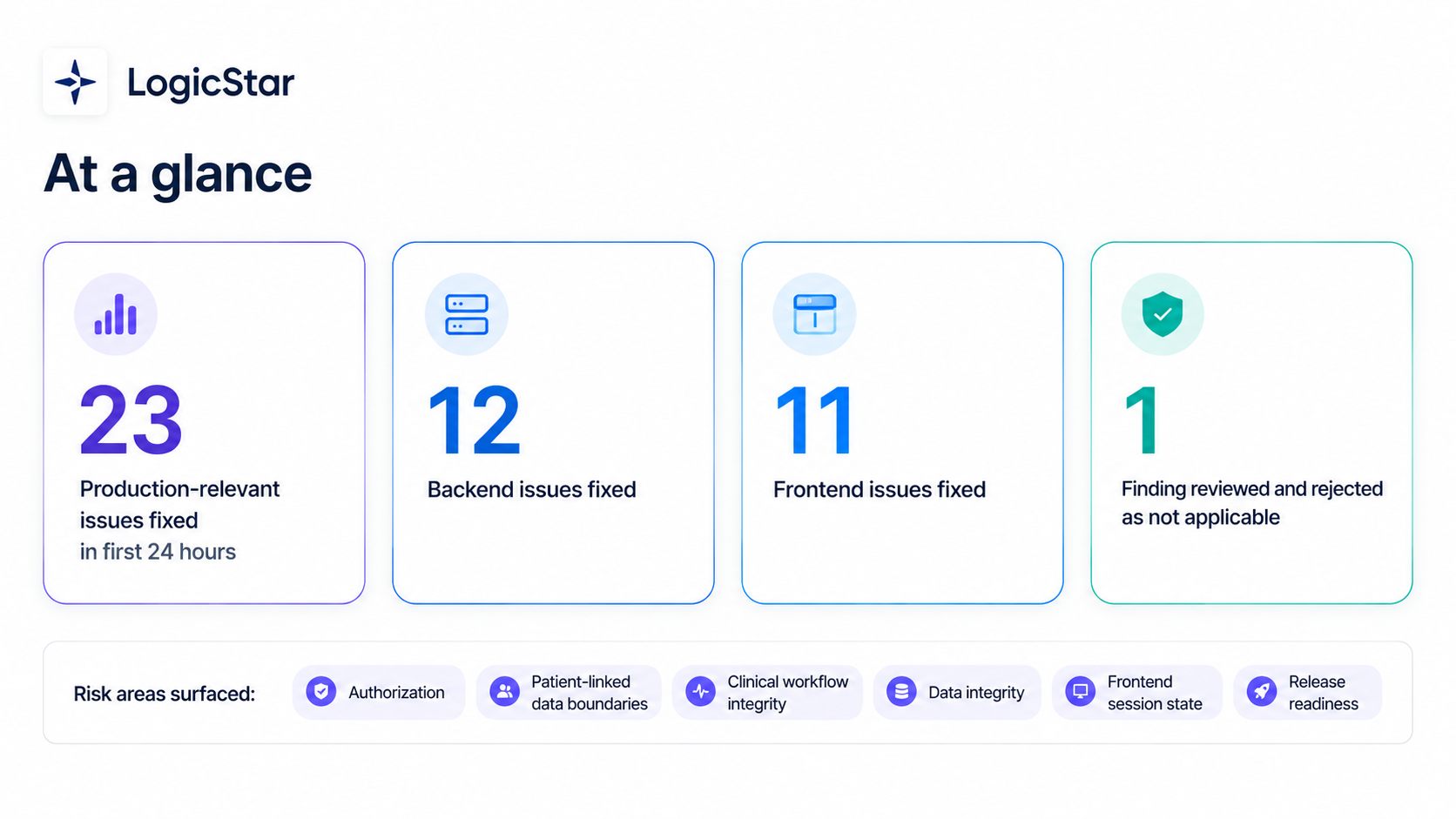
The application owner fixed 23 production-relevant issues across frontend and backend workflows, with one finding reviewed and rejected as not applicable.
The result was not just a cleaner backlog.
It was a stronger release posture before broader exposure to hospital users.
AI coding agents are changing how software is built.
They make it possible to generate large amounts of working product code quickly.
That is useful.
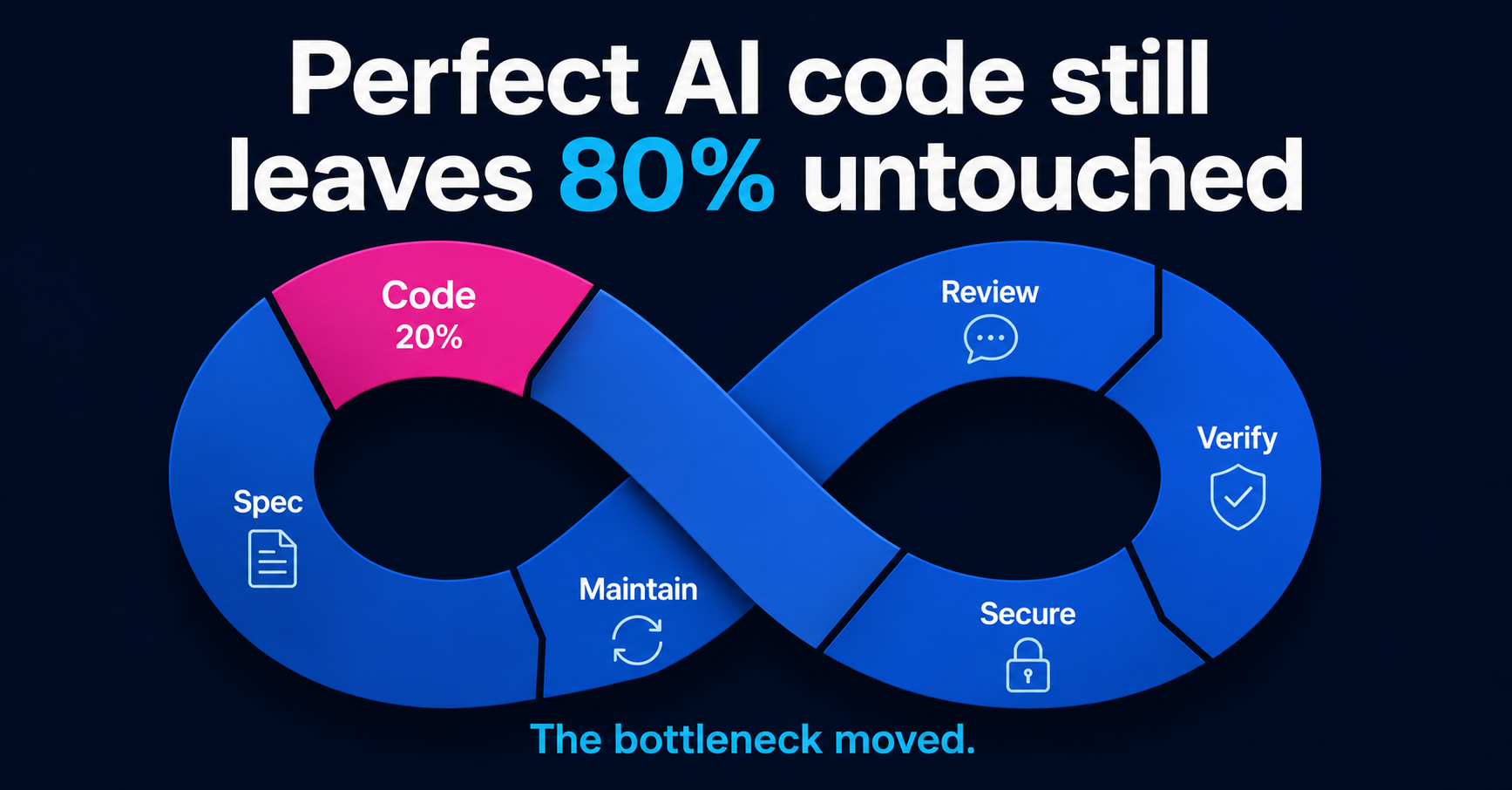
But faster software output does not automatically create production readiness.
In sensitive applications, the hard problems are often not visible in the UI. They are hidden in permission boundaries, role models, patient ownership checks, data mutation paths, session transitions, schedule handling, and operational edge cases.
For a medical application preparing for hospital rollout, those gaps matter.
They can affect privacy, auditability, clinical workflow integrity, staff trust, and release confidence.
LogicStar identified issues across both backend and frontend workflows.
The findings clustered into six production-risk categories:
This grouping matters because production risk is rarely caused by one isolated bug.
It usually appears when many small implementation assumptions meet real users, real data, real permissions, and real operational workflows.
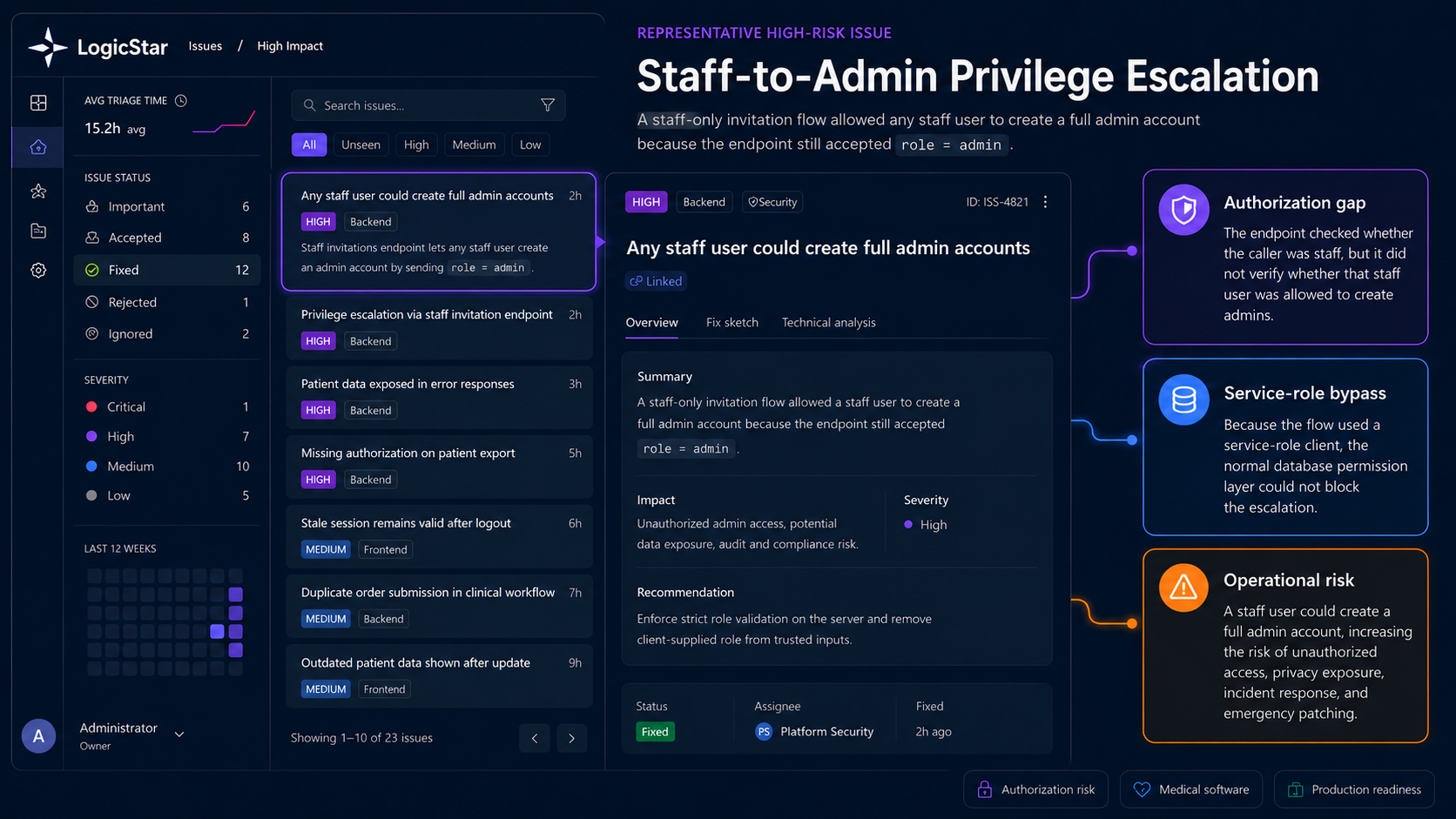
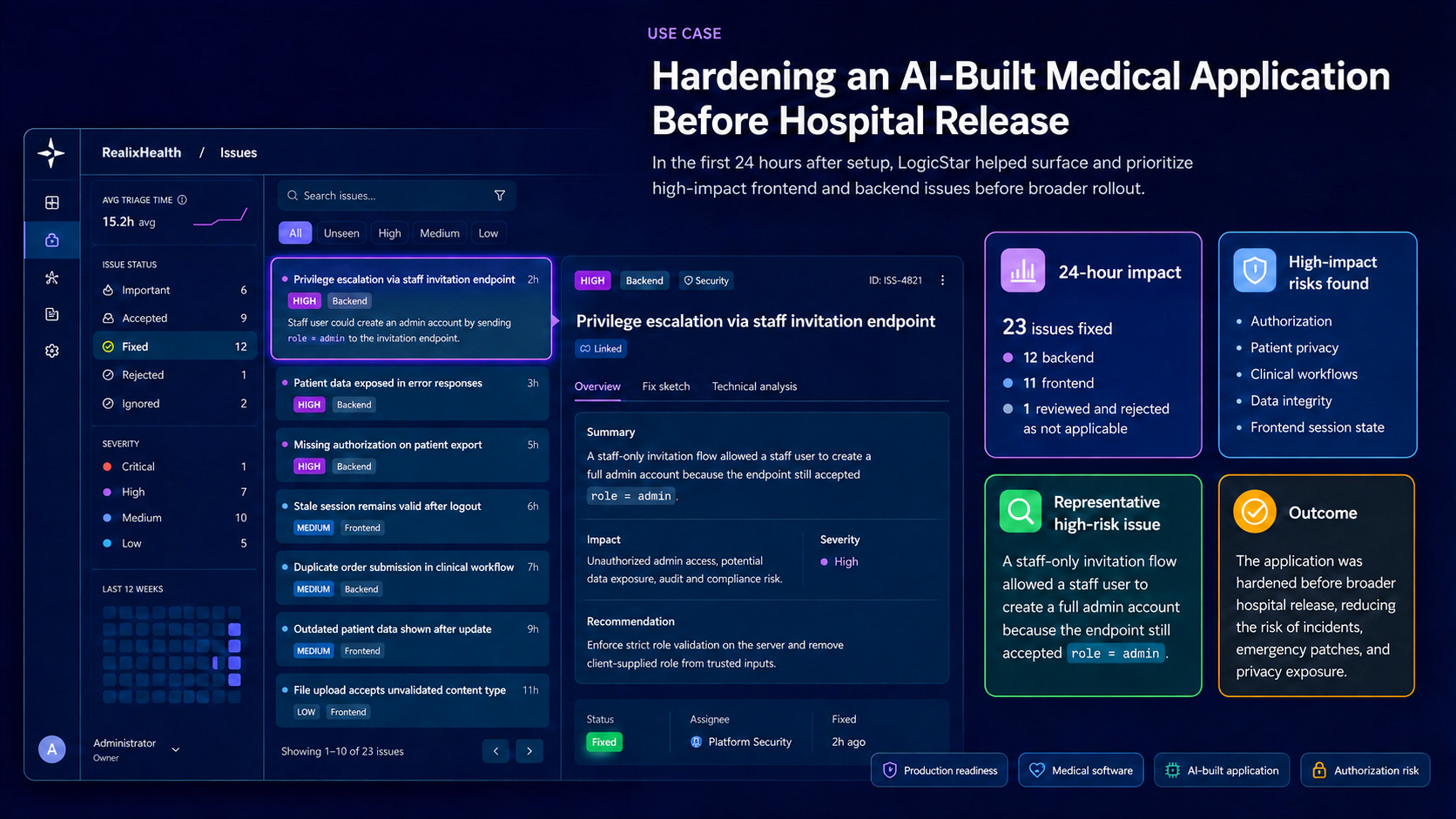
One representative high-risk issue was a staff-to-admin privilege escalation bug. The issue was not complex. It was a trust-boundary mistake. A staff-only invitation endpoint checked whether the caller was staff. But it failed to check whether that staff user should be allowed to create administrators.
The endpoint accepted: role = admin
It then used a service-role database client to invite the user and assign the admin role. That meant the normal database permission layer could not block the escalation.
Authentication passed.
Authorization failed.
The practical result was serious: Any staff user who could call the endpoint could create a new full-admin account.
In a standard SaaS application, that is already a high-impact authorization bug. In a medical application, the risk is much larger. A full-admin account can potentially access sensitive operational workflows, patient-linked records, exports, configuration, staff administration, audit-relevant data, and internal system controls.
This kind of issue can quickly move from a software defect into an operational incident.
It can create:
This is the type of issue that should be fixed before wider release, not discovered after real users are already depending on the system.
The privilege escalation issue was not isolated.
LogicStar also surfaced issues across backend and frontend workflows that reflected the real risk profile of an AI-built medical application moving toward production.
Examples included:
Each issue looks like an implementation detail in isolation.
Together, they represent the difference between:
“The application works in a demo.” And “The application is ready for real clinical use.”
In medical software, production defects can become more than bugs. They can create access-control risk, privacy review risk, auditability gaps, release-governance concerns, and certification-readiness blockers.
These issues may matter for GDPR, HIPAA, MDR, FDA medical-device software readiness, or internal hospital risk, security and ethics review. LogicStar does not determine legal compliance or issue regulatory certification. It helps teams surface, prioritize, and remediate production-relevant issues earlier, creating stronger technical evidence for security reviews, privacy assessments, audit-readiness work, certification-readiness work, and release-governance decisions before wider rollouts or widespread incidets.
The goal is to reduce the chance that preventable software defects are first discovered by clinicians, patients, support teams, auditors, or incident responders.
The result was not an abstract risk report.
It was a concrete hardening cycle.
Within the first 24 hours:
The rejected issue was reviewed and dismissed with a clear explanation:
“There are no manual entries allowed. There is also no way to enter manual entries.”
That is the right outcome.
The point is not to maximize the number of findings.
The point is to identify issues that are real, explain why they matter, and help the application owner decide what deserves engineering attention before the product reaches a wider user base.
If these issues had reached wider hospital usage, the risk would not have been limited to engineering inconvenience.
The application could have faced:
The cheapest time to find these issues is before release and before users are impacted.
AI coding increases software output.
But software output is not the same as production readiness.
In medical applications, hidden gaps in authorization, patient-linked data boundaries, state handling, and workflow logic can create real privacy, auditability, and clinical operations risk.
LogicStar helps teams identify and fix the issues that matter before wider release.
Faster shipping.
Fewer surprises.
Safer production rollouts.
LogicStar helps engineering teams identify and fix release-critical issues before users, customers, or operational teams absorb the risk.
Request a production-readiness review:

Build an Agentic SDLC you can trust. Prove where agents can work without additional human review.
A forward-deployed engineer, plus the platform, measured on your own repositories.

.png)